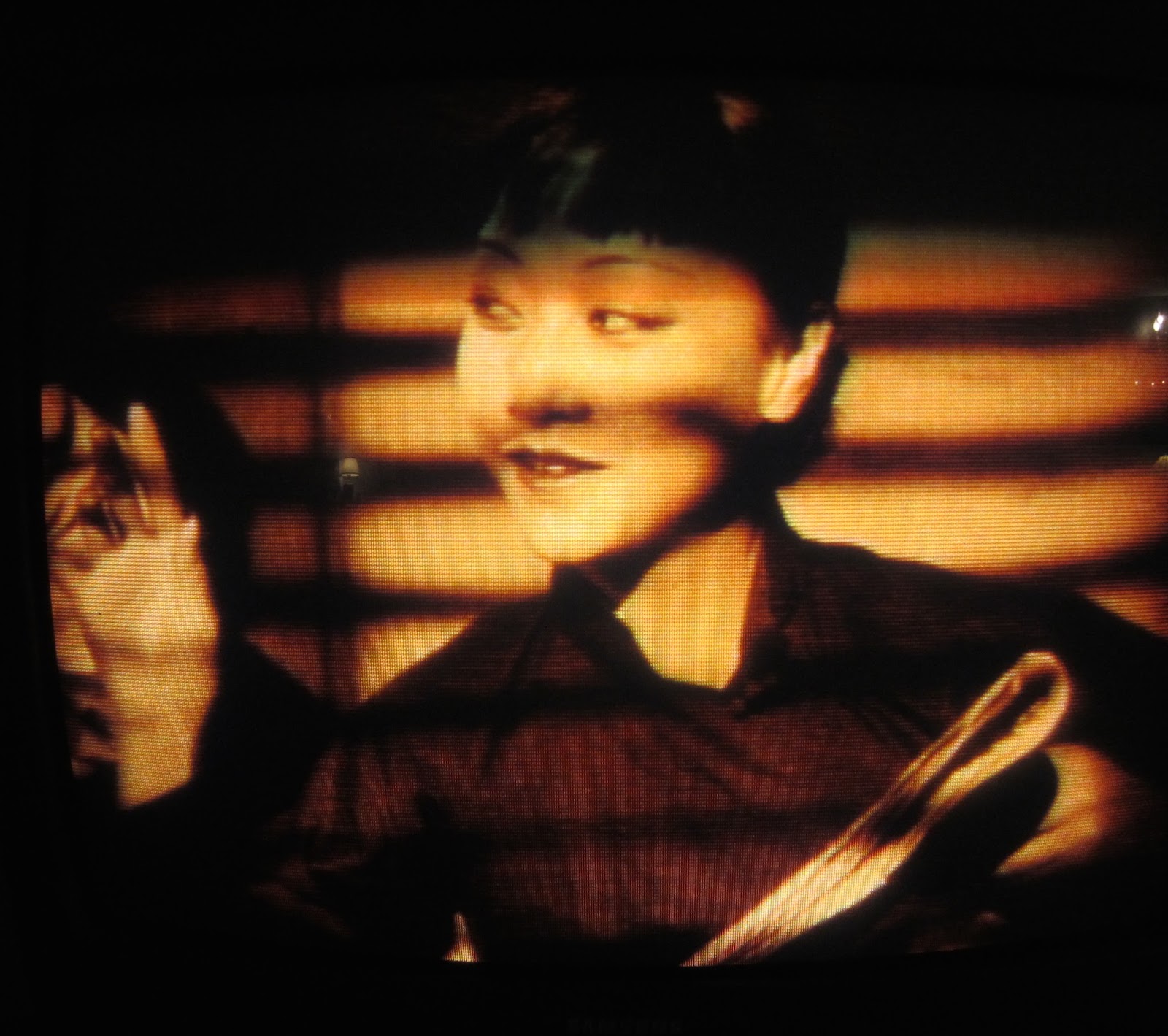
Tuesday, November 10, 2015

Walt Whitman's The Force Awakens

I'm so excited about the new Star Wars film that I wanted to express myself in some way.  And since I like to be a bit unusual, here are scenes from the international trailer mixed with quotations from Walt Whitman's Leaves of Grass (1855).  The sprawling, searing poem is considered one of the great literary achievements of American history.  I don't know the plot of the movie -- this is just me pairing the images with interesting passages. 

You can watch The Force Awakens trailer here:
https://www.youtube.com/watch?v=SdAUiyeJMFQ

 So here is the poetry, from the page... and the screen.


I celebrate myself,
And what I assume you shall assume,
For every atom belonging to me as good belongs to
            you.


Prodigal!  you have given me love! …. therefore I to you
give love!


The whirling and whirling is elemental within me.


Dazzling and tremendous how quick the sunrise would
kill me


Is this then a touch? […]
Flames and ether making a rush for my veins […]
My flesh and blood playing out lightning


Now Lucifer was not dead…. or if he was I am his
            sorrowful and terrible heir […]
I will either destroy him, or he shall release me.


I understand the large hearts of heroes,
The courage of present times and all times


I am given up by traitors; […]
You villain touch!  what are you doing?.... my breath is
tight in its throat


This day before dawn I ascended a hill and looked at the
            crowded heavens


Agonies are one of my changes of garments;
I do not ask the wounded person how he feels…. I
myself become the wounded person


Great are the myths […]
Great are the plunges and throes and triumphs and falls

Wednesday, November 4, 2015

Anna May Wong’s Epic Performance in Piccadilly

Anna May Wong had one of the greatest film entrances of all time, as Shosho in the silent film Piccadilly.  When a dirty plate upsets a patron at a London nightclub, the owner goes on a quest to find the source of the problem.  The manager of the restaurant sends him back to the chaotic kitchens.  The head chef sends him back to the steamy scullery, where the dishes are cleaned.  There he discovers a Chinese woman dancing sensually but rather playfully on a table, for an audience consisting mostly of tired but enthralled (white) dishwasher women.  For this one moment, one can almost forget the racism, exoticism, and sexism that permeated the world in which Wong (and Shosho) worked.  Shosho’s dancing has thrown the whole system of decadent indulgence and labor exploitation into disarray.  She seems to be dancing for the sensual joy of it, and in defiance of her precarious racial and economic status.  It’s stunning, unforgettable, hypnotic.
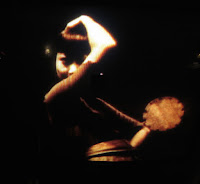

Piccadilly was released in 1929.  According to Wikipedia, “Gilda Gray was the top-billed actress, but Variety commented that Wong ‘outshines the star’ and that ‘from the moment Miss Wong dances in the kitchen's rear, she steals 'Piccadilly' from Miss Gray.’”  I would go further.  Wong pretty nearly renders the rest of the cast irrelevant.  The film has some wonderful editing and cinematography, but it’s Wong’s acting that makes the film live and breathe… and shine.

In the first part of the film Shosho looks shy and aware of her subordinate position as a poor, female, ethnic minority.  Yet she never looks humiliated or despondent.  She faces off with Valentine Wilmot, the manager of the nightclub, completely unintimidated by the stern man who just fired her.  She looks bored as her female scullery boss talks to her on the bus, and as she later dines with her Chinese boyfriend.  Her world is dull, narrow, confining… and she knows it.

Wilmot considers hiring her as a dancer, fretting over her and covertly sketching her in his office.  Wong’s posture is initially defiant or at least skeptical.  Yet, as Shosho realizes Wilmot’s interest (both personal and professional), her face brightens, flickering into brief pulses of desire and ambition.  It’s the look of a woman realizing that a whole new world is possible, if she’s brave enough to reach for it.  I think there’s more nuance and power in her eyes and lips than in the whole performances of some modern Hollywood actors.

At a clothing shop in the Limehouse district, where she is shopping with Wilmot, she emerges from behind a curtain with hands on hips, glaring, as though ready for an argument or confrontation.  “This is the costume I want,” say the titles, but Wong has already said it in silence.  Wilmot concedes to her demands, despite the cost of the garment.

There’s a fair amount of exoticism and racism in this film.   BFI’s Screenonline.org.uk also notes, “Naturally, Piccadilly's publicity made much of Wong's exotic beauty: one contemporary poster - for the film's Austrian release - carries an illustration of the star dancing topless. It would have been unthinkable to portray a white actress in this way and, needless to say, no such image appears in the film.”  Yet the film explicitly confronts racial prejudice with surprising openness.  Screenonline notes how “one remarkable scene has a white woman expelled from a bar for dancing with a black man, mirroring the social taboo of the film's central relationship.” (http://www.screenonline.org.uk/film/id/486639/)

In Piccadilly, though, Wong always seems to transcend bias and boundaries – performing with a kind of freedom that cracks and sometimes shatters the limitations imposed on her.

Ms. Wong would have connected personally with such issues.  In the liner notes to the Milestone Collection DVD, Zhang Zhen (author of An Amorous History of the Silver Screen) remarks how Wong endured racial slurs and even physical violence at her school in California.  She would make compromises in her film choices, doing the best she could to form a career in a world prejudiced against her skin, her heritage, and her gender.  But she would also speak out against such prejudice, “In a 1933 interview for Film Weekly entitled ‘I Protest’, Wong criticized the negative stereotyping in Daughter of the Dragon, saying, ‘Why is it that the screen Chinese is always the villain? And so crude a villain – murderous, treacherous, a snake in the grass! We are not like that.’” (https://en.wikipedia.org/wiki/Anna_May_Wong)

The centerpiece dance of the film – in fancy, “exotic” costume – is spectacular.  Wong sways and floats like some shimmering cosmic particle from an alternate universe, using her fluttering hands to great effect.  Her shadow on the floor looks like a mercurial ghost – or a glimpse of an Indonesian shadow play.  The audience sits in quiet awe.  Her rival dancer, Mabel, faints, knowing that she has been eclipsed by this nuanced, hungry, dazzling performance.

The next scene proves Wong is much more than a talented dancer.  She springs out of bed to read glowing reviews in the paper, filled with astonishment and joy.  In a virtuoso moment of silent film acting, she reads the report to her boyfriend, tilting her head, flickering her eyebrows, arching her hand.  There are no titles, but we don’t need them.  Wong has told us everything we need to know about dreams fulfilled, new horizons, and a wide-open future.  She playfully throws the paper of the boyfriend’s head then (presumably) kisses him beneath it.


From this point, though, the romance with the nightclub owner evolves.  Wong now wears lavish outfits with poise and power.  In a crucial scene, Shosho signs the contract to make her a star dancer.  Here Zhang Zhen draws our attention to a fascinating hidden-in-plain-sight truth.  “When she signs her name on it, she writes in Chinese, and the name appearing is not Shosho, but the actress’ Chinese name, Wong Liu-Tsong… ‘Frosted Yellow Willow.’”  Zhang Zhen concludes, “Her signing through both her hand and body on the screen practically made her a co-author of Piccadilly, one of the last silent masterpieces…”

What makes the final segments of the film amazing is that way that Wong’s character dominates the romance.  It’s perfectly obvious that she’s seducing Wilmot – not against his will, of course, but she always seems to be in control of the situation.  She takes him to a low-class club with wild dancing.  She stares at him over her drink as he watches the masses crowding for booze.  Back outside, he says goodnight, but she puts the key to her apartment in his hand.  Considering that this is a film whose pivotal kiss was edited out by censors, her intimate encounter with him is remarkably intense.  She smiles sweetly, lies down on the couch, and seems to have a rapturous moment even before he touches her.  He tries to kiss her hand – she touches her own lips.

After Wilmot leaves, Mabel shows up, overwhelmed with jealousy.  Wong stares her down with a series of withering “What are you going to do about it?” glares.


When Shosho refuses a cigarette with the excuse that she doesn’t smoke, she notices the ashtray with Wilmot’s cigarettes and contemptuously dumps them in the trash – not even really trying to hide it.  “I want him – and I shall keep him,” is one of the titles, but, again, they almost didn’t have to bother.  Her death scene has an elegant, dance-like quality, as her hands slip away from her face.  Even after her character is killed, Wong haunts the movie like a determined specter in flashbacks, including a tense fight scene with her jealous former boyfriend.

Ms. Wong owns this movie like few have ever owned a movie.  Sometimes she has the innocence and elegance of Audrey Hepburn and sometimes the casual confidence of Katharine Hepburn – yet charged with a defiant sexual energy that forbids anyone to look away, or to treat her as anything less than a being of strength and willpower.  And, in this film, Ms. Wong does all this even without the power of her voice.  Zhang Zhen rightly remarks that this was a woman working in a world that didn’t deserve her.

Yes, Piccadilly is a masterpiece of silent film – but it only achieves that because of the glorious Anna May Wong.

Saturday, October 31, 2015

Scooby-Doo Review: A Night of Fright

A Night of Fright is No Delight may be one of the most iconic episodes of Scooby-Doo.  The convoluted mansion on the rocky cliff is stunning. The apparently ephemeral but chain-clanking shadow is an interesting exploration of the fundamental tensions of spectral incarnation.  “If he’s a Phantom Shadow, how come he leaves footprints?” asks Velma. Eventually the “shadows” are manifest as “ giggling green ghosts” with a cool Nazgul vibe – except, of course, that these cackle madly, with the malevolent insanity of the undead.


Spider webs are everywhere, a reminder that this building is old, and untended.  Relics from the Civil War are hidden away under the mansion.  Supposedly the Colonel collected them, but they are packed away in a gloomy cave, buried like so much of America’s violent history.  Yet the Colonel still has a fortune in Confederate money, and is evidently clinging to the South’s broken political project, like a ghost clinging to the world long after physical reality has pushed itself past the reach of the mortal body.

There’s some nice humor in the episode, of course.  Scooby marches along in four slippers, heading for the bathtub.  Shaggy, in his sleeping cap, prepares a giant sandwich – and tries to put fish food on top, only to be snarled at by a fish.

But who builds a mansion with crushing walls?  Really.  How often does that prove useful?  And do you know how expensive those kind of pneumatic systems can be? Never mind, we’re in the world of cartoon physics, where an ordinary electric fan can lift a washing machine off the ground and people in costumes can somehow fly over the floor.  It doesn’t matter.  Scooby-Doo is all about mood, mayhem, and imagination.  And those wonderful monsters have lingered in my consciousness for decades – giggling, cackling little shards of creepiness tucked away in my childhood mind.

Image: http://scoobydoo.wikia.com/wiki/Green_Ghosts_(A_Night_of_Fright_is_No_Delight)

Sunday, October 4, 2015

"Little Birdie, Why Do You Fly Upside-Down?"

Just in case you haven't been checking updates about my fiction over at
http://museofthemonstrous.blogspot.com
(and you should!), you may not know that I'm on Twitter.  Please consider following me at:
https://twitter.com/sjankiew
 I'm following lots of creative people so you'll get plenty of retweets regarding all things spooky, cute, retro, and weird!  All that and maybe a few deep thoughts to ponder over while sipping some tea.  Plus, you'll get updates about most of my blog posts.  Check it out!


Image: Jim Henson
http://www.pbs.org/program/in-their-own-words/

Monday, September 28, 2015

The Death of Innocence

Hellboy: Darkness Calls – Chapter 4

Frontispiece Image: Vasilisa the Beautiful

Bodies, of course, will be prominent in most comics – yet Hellboy explores the presence, absence, and trauma of bodies in fascinating ways.  This chapter begins with a trail of the dead.  There is Perun floating in the river (see Chapter 3), a graveyard around a church, blood pooling on stones, an image of the body of the post-Crucifixion Jesus, murdered priests.  Then, at last, we find the fey folk – Gruagach and his companions, wandering into dark catacombs.  Their monstrous bodies are dwarfed by the dark, sprawling architecture of the place.  Then – emerging suddenly from the shadows – we see the face of a giant, the curiously gentle guardian of an apocalyptic queen in her prison-tomb.  Broken bodies pave a trail that only leads to monsters… and to the promise of more carnage.

Meanwhile, Hellboy and the little domovoi are still chatting together – until Koshchei the Deathless smashes his way into the house.  Koshchei seems a body of pure violence – a human form that has surrendered completely to the archetype of the warrior.  Indeed, he is not in possession of his soul, which is guarded by the Baba Yaga.  Such, perhaps, is an eternal predicament for a soldier, as Mary Wollstonecraft suggests in her Vindication of the Rights of Women: “subordination and rigour are the very sinews of military discipline; and despotism is necessary to give vigour to enterprizes that one will directs.”

The relentless warrior is stopped only by the arrival of an incongruously innocent body – a young girl, equipped with a skull on a staff.  Brilliantly (in story, and out), Vasilisa first appears as a faceless figure shrouded in white light.  In most of the scenes that follow she seems to float above the snow, an angelic and ethereal presence in a world of blood and destruction.  “Koshchei the terrible, beaten by a little girl!” the domovoi mocks him.


It’s quite brutal when Koschei finally skewers the girl with an arrow.  She turns into a doll – she may have been one all along, animated by some ancient magic.  Even her dying words are mechanical and doll-like.  “It’s all right,” she keeps repeating, trying to reassure the traumatized Hellboy.  Curiously, while the original folktale does involve a magic doll, it doesn’t seem to feature such a transformation (https://en.wikipedia.org/wiki/Vasilisa_the_Beautiful).  It’s just another example of Mike Mignola’s impressive ability to absorb and transform myths in the service of his storytelling.

All of these body forms are variations on the human condition – mortality and spirituality in the priests and Christ, anger and disillusionment in the pig-man Gruagach, savage brutality in Koshchei, childhood innocence in Vasilisa.  Those last arrows from “the Deathless” Koshchei are just wounds for Hellboy – a torture that he can transcend – but they seem to pierce through everything and everyone with their unerring malice.

As Jane Yolen says in the introduction, “It is a deeply human story for all its monsters.”

As always, the art is incredible.  Duncan Fegredo provides some spectacular battles in this book, but his work also shines in subtle details: the texture of the wood panel behind the altar, the smoke and dust from the dark pit that looks jagged and bat-like, the weird geometry of the magical door opened by Vasilisa, the hewn sadness on the face of Hellboy.  The nuanced textures of the drawings capture a world erupting – seething, straining, shattering – and lurching like a wounded dragon through vast labyrinths of mythology.


Image: Ivan Biliban

Thursday, September 24, 2015

The Medium is the (Blasphemous) Message

H.P. Lovecraft, The Whisperer in Darkness (Part 3)

It might be tempting to dismiss the mi-go as sloppy (or at least outdated) science fiction.  They fly through nonexistent ether, over distances that would take them countless years travelling, presumably, well below the speed of light.  Yet there is something delightfully creepy about an alien patiently flying the fathoms from Pluto to Earth – perhaps in a zen-like trance, or maybe bored to the point of extraterrestrial madness.  Such creatures might well hatch plans spanning eons and carry them out with the inter-generational patience of Frank Herbert’s Bene Gesserit (read Dune!).  Somehow Lovecraft’s wobbly science adds to the power of the story, rather than subtracting from it. 

Likewise, the narrator Wilmarth’s assertion that photography is “an impersonal transmitting process without prejudice, fallibility, or mendacity” is problematic, even in an age before digital editing.  Nonetheless, there’s an interesting paradox in that this “objective” evidence (of aliens in Vermont) is also described as vague and “damnably suggestive,” still retaining some sense of mystery and uncertainty.  This tension is vital to many forms of supernatural horror – teasing the reader or viewer with truths that must be solid enough to terrify yet elusive enough to defy rational reply.


So we have ether and old photographs – and it makes me think that Lovecraft is systematically exploring the notion of medium in this story.  How are truths – or horrors – transported from place to place, and to the minds of those who might perceive them?  By what substance or technology are they conveyed?  From the realm of the eye we move to the work of the ear – and the sounds that are provided on a phonograph record.  Wilmarth is troubled by an enigmatic recording of a terrible voice.  “Its sudden advent that first time almost stunned me, and I heard the rest of the record through in a sort of abstracted daze.”  This is such an intriguing presentation of strangeness – of the alien, as it were.  Madness is usually depicted as a collapse of rationality – yet for Lovecraft (as, I suppose, for many ancient societies) it resembled a kind of divine if terrible gift, the revelation of an alternate and largely incomprehensible reality.  “When the longer passage of buzzing came, there was a sharp intensification of that feeling of blasphemous infinity…”

And, this being Lovecraft, even the simple medium of writing can be dangerous.  Wilmarth speaks of “that terrible and encyclopaedic letter.”  It’s all building towards the rejection of the body as a medium or vessel for the mind – and those space-defying jars filled with human brains.

Image: Odilon Redon (Getty Open Content)

Sunday, September 6, 2015

Camp Crusaders! - Ring Around the Riddler

Batman – Season 3, Episode 2 – Ring Around the Riddler

Batgirl continues to infuse the series with a dose of female empowerment – though surrounded by an assertive patriarchal culture.

The centerpiece of the show is a boxing match between Riddler and Batman.  Pugilism might reek of masculine brutality, but Bruce Wayne calls it “the manly art of self-defense.”  Riddler’s frenetic antics work well in a comic boxing match.  I think this is one of his better episodes, actually.  Anarchic though he may be, he still echoes the patriarchal order of Gotham City.  In the throes of melodramatic frustration, he asks “What’s looser than a thread, a fish, flying ribbons?”  The answer: “A woman’s tongue.”  It doesn’t even make much sense to me in the context of the scene, unless he’s mad at his henchwoman for distracting him with the offer of a drink.  He just lashes out with random misogyny.

At least the Riddler’s henchwoman isn’t too ditzy.  Actress Peggy Ann Garner offers a focused and worldly Betsy Boldface, befitting her role as a reporter, and infuses the character with a tinge of the campy cuteness that the show demands.  Her role as Betsy is sadly underdeveloped – I almost want to write some fan fiction about her life in Riddler’s gang.  We also get the introduction of Joan Collins as the slinky, sultry Siren.  And because just about EVERYTHING is gender-determinate, her hypno-sonic voice only works on men.

I’m more and more impressed by what Yvonne Craig was doing with her role as Batgirl.  She talks to her pet bird Charlie with sincerity and warmth.  It could sound crazy or sad, since Batgirl is profoundly isolated within the confines of her secret identity.  Yet Craig makes it work.  And Barbara gets a chance to show off her impressive education, reporting to Batman on ancient scroll-work at the temple of Kafajah.  Ms. Gordon makes a sharp contrast with the clever but uneducated Catwoman of the earlier seasons.  She manages to make Barbara Gordon optimistic, cheerful, and thoughtful in a show where women are so often ditzy, evil, or insane.  And all of that is in her role as an “ordinary” woman – aside from what she achieves in her villain-kicking costume.

Batman praises her in a condescending manner: “It’s lucky you were in the vicinity of Gotham Square Garden.”  Batgirl replies, “Yes.  Luck is an important weapon to a woman crime-fighter, Batman.”  At first I wasn’t sure whether the show was mocking Batgirl.  But Craig’s look and tone are revealing – she’s taking a jab at Batman’s condescension, even though he’s too distracted with work to notice.

A few other moments of amusement or interest…

The Riddler says to the Siren: “Well, then men you shall have.”  Joan Collins’ look is something between “Yes, please” and “Well, of course.”

I love how Batman tries to explain the weird convolutions of the plot.
Robin: Holy hieroglyphics.  How would Riddler know that, Batman?
Batman: The mind of a criminal like Riddler’s is a sponge that soaks up many strange facts, Robin.

Finally, a piece of dietary advice for the Boy Wonder, when he gets too excited about some camel-grass juice...
“Beware of strong stimulants, Robin,” warns Batman.

Personal Rating: B+

Riddler at the top of his game.  Batgirl being cool.  A campy boxing match.  Not bad.